
The Room That Changed My Perspective
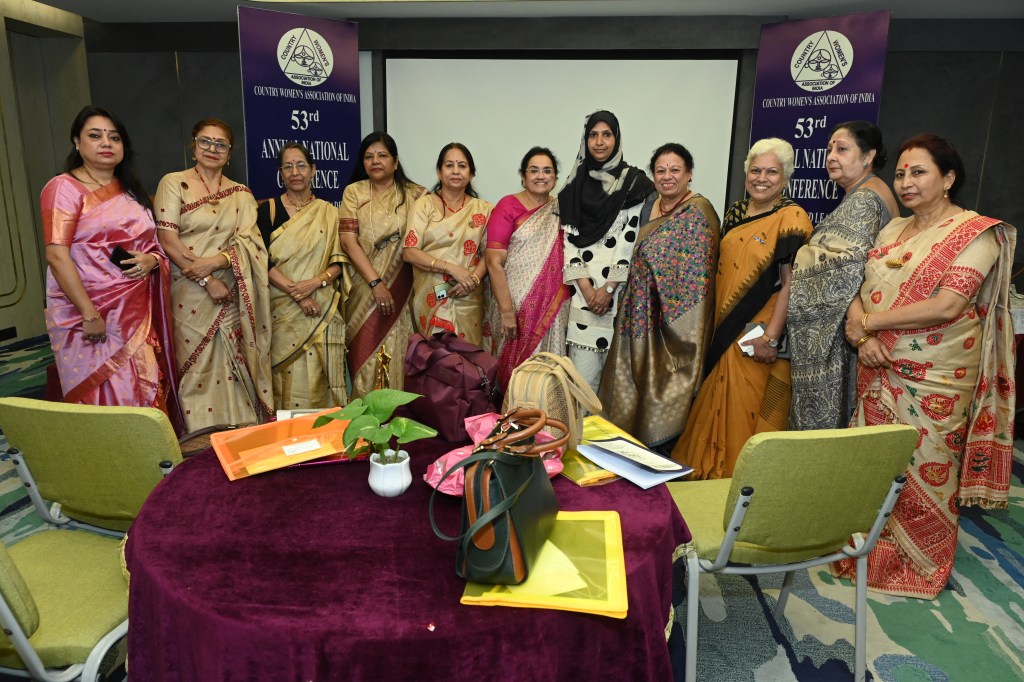
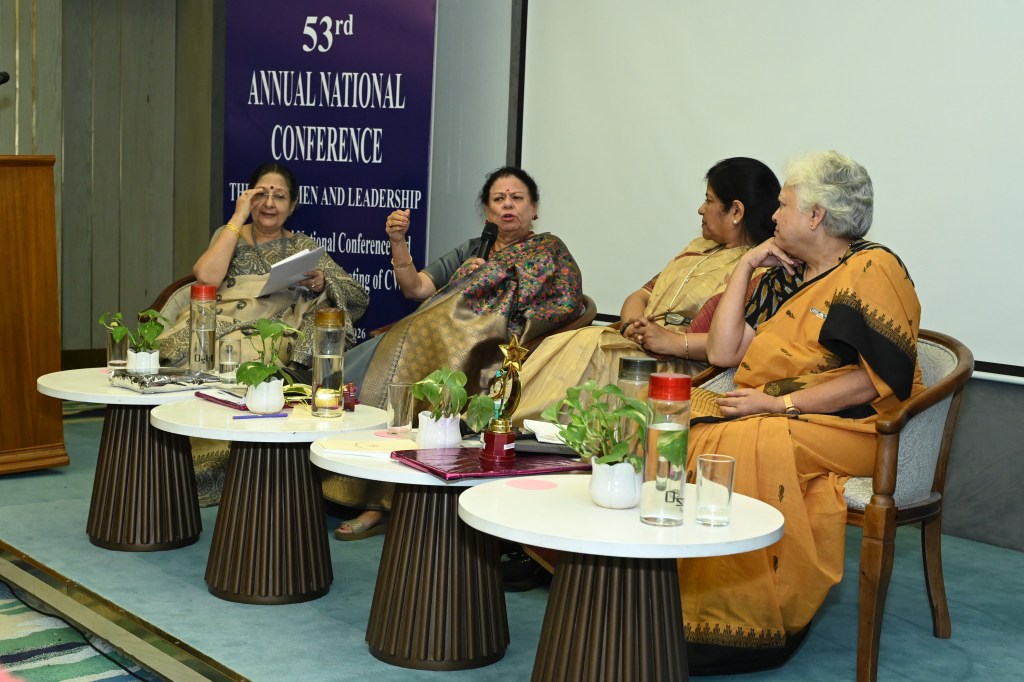
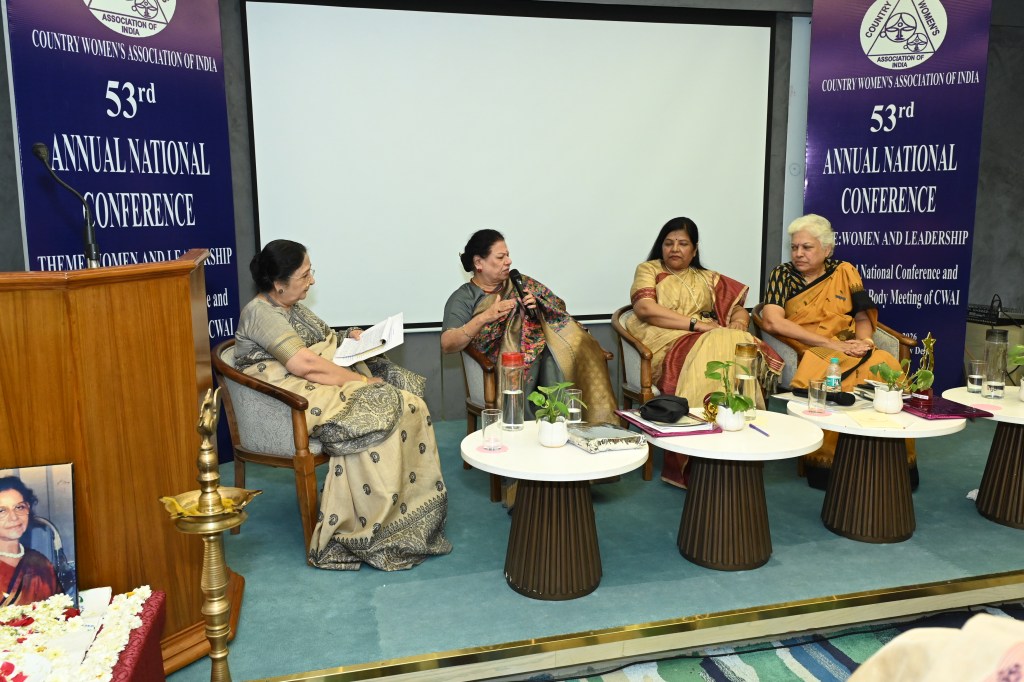
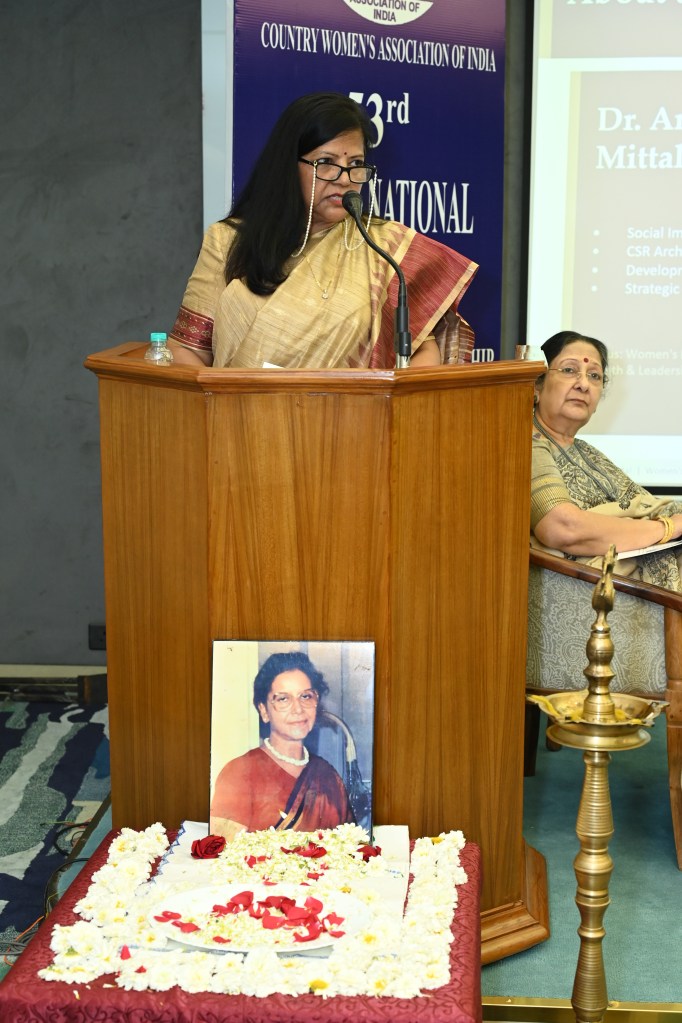
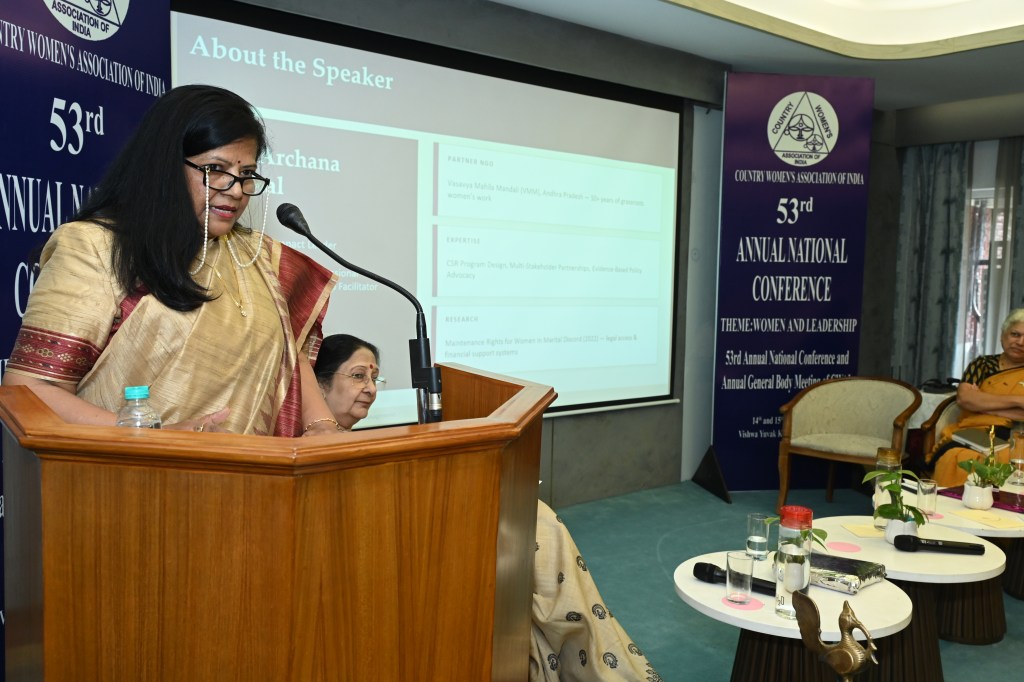
Speaking at the 53rd Annual National Conference of the Country Women’s Association of India in New Delhi was one of those rare professional experiences that stays with you long after the event is over.
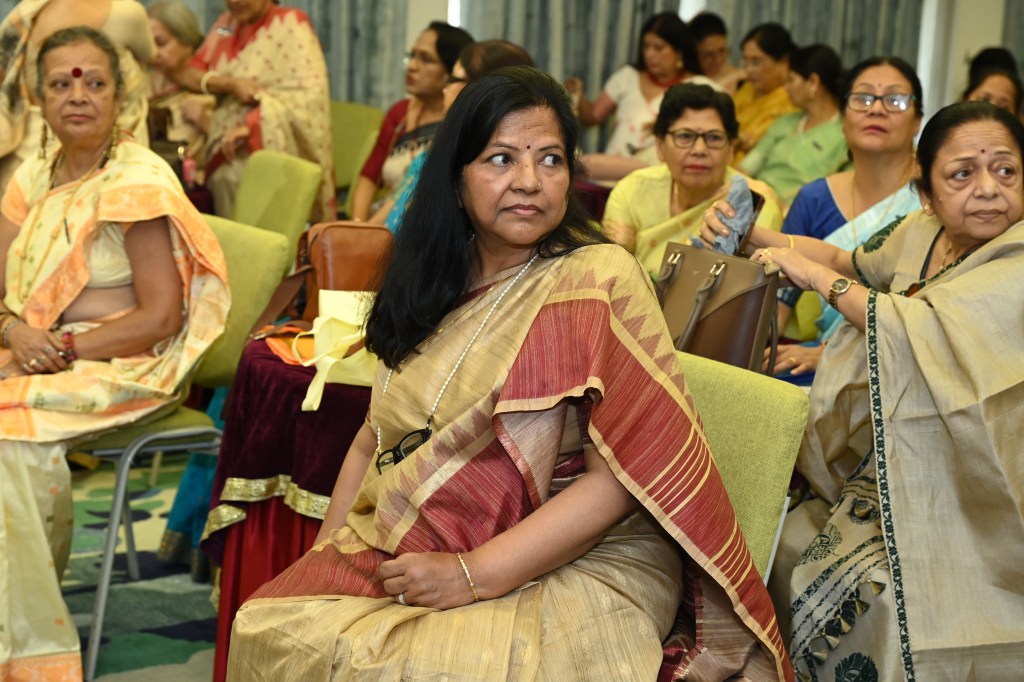
What made it remarkable was not the stage or the programme. It was the room. Women from across India had gathered together: artisans, teachers, social sector professionals, entrepreneurs from cottage industries, CEOs. Women from Kolkata, Assam, Telangana, Mumbai, Delhi, Kashmir. Each carrying a different story, a different context, a different set of challenges — and yet, a striking consistency in what they had navigated to get there.
My topic was women’s leadership in corporate management. But what I carried out of that conference was shaped as much by who I met as by what I presented.
Ms. Preeti Srivastava, our Chief Guest, set the tone early. Her central point was unambiguous: women must support women, everywhere and at every point in life. Not as sentiment. As practice.
I was deeply moved to meet Irfana from Kashmir, creating awareness around menstrual hygiene in one of the most challenging environments imaginable. Meera Khanna spoke with rare eloquence about policy-level changes that have a direct bearing on women’s lives. And hearing Dr. Keerthi, founder of Vasavya Mahila Mandali, speak with such passion about her work on health, legal rights, and sustainable empowerment for women was a reminder of what sustained, ground-level commitment actually looks like.
This article is the sum of those interactions, those lessons, and the research that has shaped my own thinking on why women’s leadership continues to stall — and what it will take to change that.
The State of the Leadership Landscape
The global data on women in leadership tells a story of simultaneous progress and structural stagnation.
Women hold 23 percent of global executive positions — less than one in four. Female CEOs in the Fortune 500 represent just 4.9 percent; in the S&P 500, the figure drops to approximately 2 percent. In India, women hold 17.1 percent of corporate board seats, up from 7.7 percent in 2014 following the Companies Act 2013. And for every 100 men promoted from entry level to management, only 87 women receive the same opportunity. For women of colour, the figure drops to 82.
In India, the picture carries particular weight. The Periodic Labour Force Survey of 2021-22 records female labour force participation at 29.4 percent, against 80.7 percent for men. That structural gap does not emerge in the boardroom. It begins long before: in homes, in classrooms, and in the accumulated weight of social expectations that define what girls are for, and what they are capable of.
“We are not dealing with a capability gap. We are dealing with a system problem. And system problems require systemic solutions.”
Three Dimensions of the Barrier
The barriers women face in reaching leadership are not singular. They operate across three interconnected dimensions, and addressing one without the others is insufficient.
Structural barriers are the most visible. Women are assigned fewer stretch roles — the high-visibility, complex assignments that build leadership credibility. Promotion gaps persist at every level. Pay disparity endures even at equivalent qualifications. Organisational cultures, built around male norms, require women to assimilate rather than lead authentically.
Social and cultural barriers operate through the double bind. A woman who asserts authority is perceived as demanding. A woman who is collaborative is seen as lacking strength. The social cost of assertion is asymmetrically higher for women — a constraint men navigating the same professional spaces do not face. In India, these dynamics are compounded by patriarchal family structures that create divergent developmental environments for girls and boys from the earliest years.
Psychological barriers are the least named in policy discussions, but operate with particular force. Research from the Centre for Creative Leadership identifies women’s top career challenges as overcoming perfectionism, managing self-criticism, and asking for what they are worth. For men, the top challenge is meeting a business target. That difference in starting point shapes everything that follows. Women wait until they meet 100 percent of the criteria before applying for a role. Men apply at 60 percent. This is not a personal failing — it is the product of decades of socialisation that trains girls toward compliance rather than ambition.
“Women wait until they meet 100 percent of the criteria. Men apply at 60 percent. This is not a personal failing. It is the product of socialisation.”
What the Evidence Says About Women’s Leadership
The research on women’s leadership effectiveness is not ambiguous. It is consistent, cross-cultural, and robust.
In 2019, Harvard Business Review published findings from an analysis of 360-degree leadership assessments covering thousands of leaders. Women outperformed men in 17 of 19 competencies that distinguish exceptional leaders from ordinary ones — including resilience, initiative, result-orientation, and bold leadership. And yet, when asked to self-assess, women rated themselves lower.
“The problem is not what women can do. The problem is what we have collectively taught them to believe about what they can do.”
Dr. Alice Eagly’s foundational research documents that women demonstrate a stronger transformational leadership style — one built on mutual growth, active listening, and sound decision-making under pressure. McKinsey’s Women Matter research confirms consistently that organisations with greater gender diversity at leadership levels outperform their peers on financial performance, innovation, and resilience. Companies with diverse leadership generate 2.5 times higher cash flow per employee.
“The business case for women in leadership is not in dispute. The evidence is clear and consistent. The question is why it is not translating into action at the pace required.”
The Way Forward
Systemic change requires action across three interdependent spaces: organisations, government and policy, and civil society.
Organisations must move beyond aspiration to accountability. That means setting measurable gender diversity targets with named owners at board level, mandating equitable access to stretch roles and high-visibility assignments, investing in genuine flexibility and childcare infrastructure, and conducting regular pay audits — then closing the gaps that are found.
Government and policy must strengthen what legislation has already begun. India’s Companies Act of 2013 produced a 9.4 percentage point increase in board representation between 2014 and 2021. That demonstrates what legislative intent, backed by enforcement, can achieve. The next steps are integrating women’s leadership into national skill development frameworks, funding grassroots leadership programmes through Panchayati Raj institutions and Self-Help Group platforms, and institutionalising gender-responsive budgeting across ministries.
Civil society and NGOs carry evidence that the formal sector has not yet learned to read. The leadership emerging from SHG federations, community women’s collectives, and grassroots development organisations is not a marginal story — it is a model. The task is to document it, advocate with it, and connect it to the institutions that shape professional and public life.
And across all of this: men must be active partners, not passive endorsers. Real change requires those with institutional authority to actively dismantle structures that preserve their advantage.
Women Supporting Women Is Not a Statement. It Is a Necessity.
I left the CWAI conference with something I did not expect: a deepened sense of clarity about what collective action between women actually looks like when it is real.
Sitting in that room, listening to Irfana talk about menstrual hygiene awareness in Kashmir, hearing Meera Khanna make the policy case, watching Dr. Keerthi speak about what sustained grassroots work requires — I realised that women supporting women is not a conference theme or a motivational line. It is the mechanism through which change actually travels. From community to institution. From margin to mainstream.
That realisation reinforced everything the research already tells us. Change does not happen in policy documents. It happens in rooms like that one, in decisions made in those rooms, and in the choices each of us makes about who we lift as we move forward.
When a woman is equally qualified — do we still choose the man?
If the honest answer, even occasionally, is yes — then that is where the work of change begins. Not with a diversity statement. With that answer.
 Archana M
Leave a comment